

As a supplier of C Band OMTs, I often get asked about the isolation between ports of C Band OMT. In this blog post, I will delve into the concept of port isolation in C Band OMTs, explaining what it is, why it's important, and how it impacts the performance of these devices.
Understanding C Band OMT
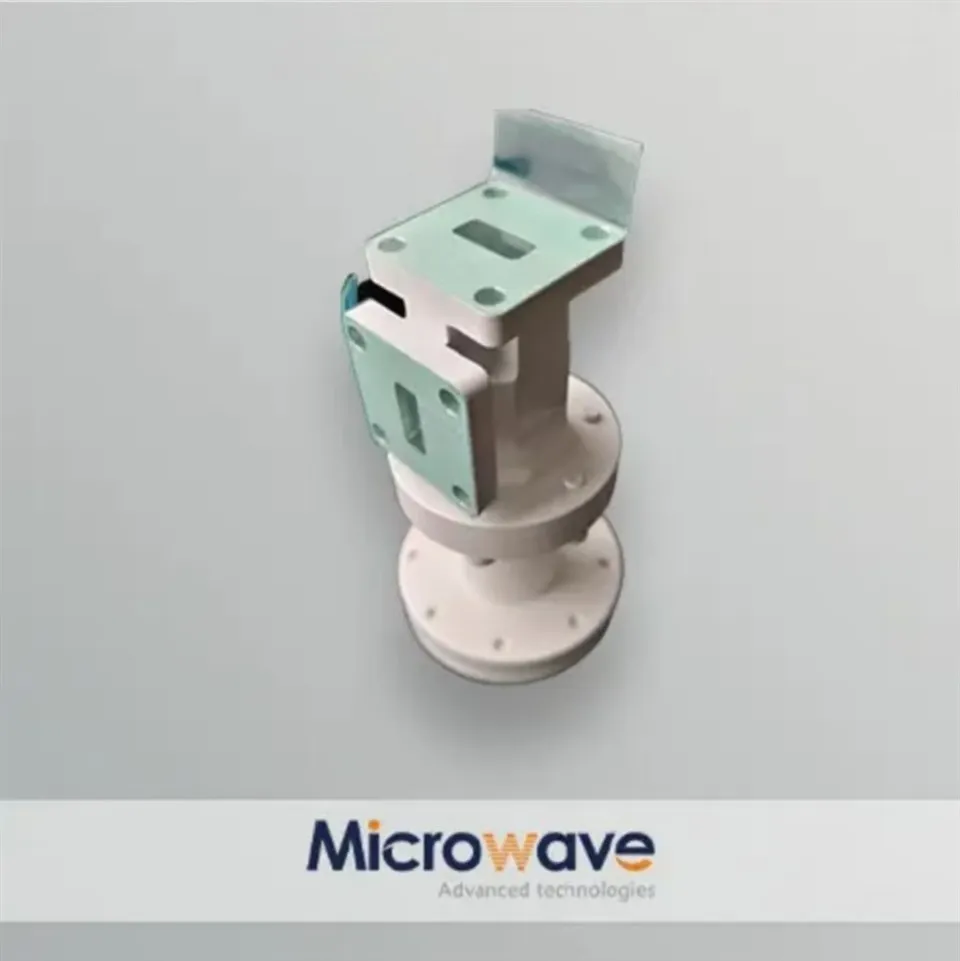
Before we dive into port isolation, let's briefly understand what a C Band OMT (Orthomode Transducer) is. A C Band OMT is a crucial component in satellite communication systems, particularly those operating in the C band frequency range (typically 4 - 8 GHz). It is designed to separate or combine two orthogonal polarizations (usually horizontal and vertical) of an electromagnetic wave. This separation or combination is essential for efficient transmission and reception of signals in satellite communication, as it allows for the simultaneous use of two independent communication channels on the same frequency band.
What is Port Isolation?
Port isolation in a C Band OMT refers to the degree of separation between the signals at different ports of the device. In a well - designed OMT, the signals at one port should have minimal interference with the signals at other ports. For example, in a C Band OMT with two output ports (one for horizontal polarization and one for vertical polarization), the isolation between these two ports indicates how well the device can keep the horizontal and vertical polarized signals separate.
Mathematically, port isolation is usually expressed in decibels (dB). A higher isolation value means better separation between the signals at different ports. For instance, an isolation of 30 dB implies that the power of the unwanted signal at a particular port is 1/1000th of the power of the desired signal.
Why is Port Isolation Important?
Signal Integrity
Good port isolation is crucial for maintaining signal integrity. In satellite communication, where multiple signals are transmitted and received simultaneously, any interference between the signals can lead to signal degradation. For example, if there is poor isolation between the horizontal and vertical polarization ports of a C Band OMT, the horizontal polarized signal may leak into the vertical polarization port and vice versa. This leakage can cause cross - talk, which distorts the original signals and reduces the quality of the communication.

System Efficiency
Port isolation also affects the overall efficiency of the satellite communication system. When the isolation is high, the system can operate more efficiently because the signals are kept separate. This allows for more accurate signal processing and reduces the need for additional filtering or signal - processing techniques to remove the unwanted interference. As a result, the system can achieve higher data rates and better performance.
Spectrum Utilization
In today's satellite communication landscape, spectrum is a precious resource. High port isolation in C Band OMTs enables more efficient use of the available spectrum. By keeping the signals at different ports well - separated, the same frequency band can be used for multiple independent communication channels without significant interference. This is especially important in areas where the demand for satellite communication services is high, and the available spectrum is limited.
Factors Affecting Port Isolation in C Band OMTs
Design and Construction
The design and construction of the C Band OMT play a significant role in determining the port isolation. A well - designed OMT with proper dimensions, materials, and manufacturing techniques can achieve higher isolation. For example, the shape and size of the waveguide sections in the OMT can affect how the electromagnetic waves propagate and interact with each other. Precision manufacturing is also crucial to ensure that the components are assembled accurately, minimizing any unwanted coupling between the ports.
Frequency Range
The port isolation of a C Band OMT can vary depending on the frequency within the C band. In general, the isolation performance may degrade at the edges of the frequency band. This is because the electromagnetic properties of the materials and the waveguide structures change with frequency. As a result, the OMT may not be able to separate the signals as effectively at these frequencies, leading to lower isolation.
Environmental Conditions
Environmental conditions such as temperature, humidity, and mechanical vibrations can also impact the port isolation of a C Band OMT. For example, changes in temperature can cause the materials in the OMT to expand or contract, which may alter the dimensions of the waveguide sections and affect the signal propagation. Humidity can also introduce losses and change the electrical properties of the materials, potentially reducing the isolation.
Measuring Port Isolation
Measuring the port isolation of a C Band OMT typically involves using specialized test equipment such as network analyzers. The basic principle of the measurement is to inject a signal into one port and measure the power of the signal that leaks into the other ports. The isolation is then calculated as the ratio of the power of the injected signal to the power of the leaked signal, expressed in dB.
During the measurement, it is important to ensure that the test setup is properly calibrated and that the environmental conditions are stable. This helps to obtain accurate and reliable isolation measurements.
Our C Band OMT Offerings
At our company, we are committed to providing high - quality C Band OMTs with excellent port isolation performance. Our C Band OMTs are designed and manufactured using state - of - the - art technology and the highest quality materials. We have a team of experienced engineers who work tirelessly to optimize the design of our OMTs to achieve the best possible isolation.
Our C Band OMT products are rigorously tested to ensure that they meet or exceed the industry standards for port isolation. We offer a range of C Band OMTs with different specifications to meet the diverse needs of our customers in the satellite communication industry.
In addition to our C Band OMTs, we also offer Ku Band OMT and OMTs - Quadrature Mode Coupler products. These products also feature high - performance port isolation and are designed to work seamlessly with our C Band OMTs in satellite communication systems.
Conclusion
Port isolation is a critical parameter in C Band OMTs, as it directly affects the signal integrity, system efficiency, and spectrum utilization in satellite communication systems. As a supplier of C Band OMTs, we understand the importance of providing products with high port isolation. Our commitment to quality and innovation ensures that our customers receive the best - in - class C Band OMTs that meet their specific requirements.
If you are interested in our C Band OMT products or have any questions about port isolation or other technical aspects, we encourage you to contact us for a procurement discussion. Our team of experts is ready to assist you in finding the right solution for your satellite communication needs.
References
- Pozar, D. M. (2011). Microwave Engineering (4th ed.). Wiley.
- Collin, R. E. (1991). Foundations for Microwave Engineering (2nd ed.). McGraw - Hill.
- Satellite Communication Systems: Systems, Techniques and Technology by Gerhard K. Kraus.