

Hey there! As a supplier of Ku Band OMTs, I often get asked about the frequency stability of these devices. So, I thought I'd take some time to break it down and give you a better understanding of what it means and why it matters.
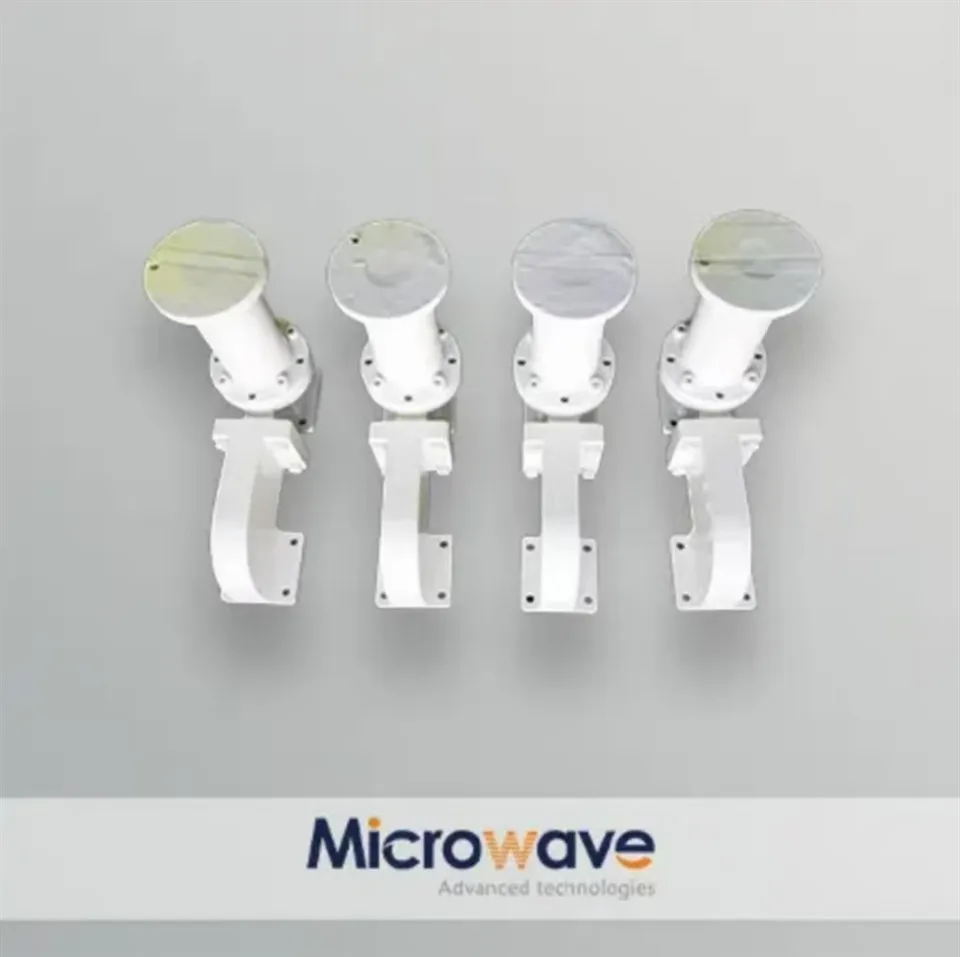
First off, let's talk about what a Ku Band OMT is. An Ortho-Mode Transducer (OMT) is a crucial component in satellite communication systems, radar systems, and other microwave applications. It's designed to separate or combine two orthogonal polarizations of electromagnetic waves at a specific frequency band. In the case of the Ku Band, this typically ranges from 12 to 18 GHz.
Now, frequency stability is all about how well an OMT can maintain its performance over a given frequency range. When we say an OMT has good frequency stability, we mean that its electrical characteristics, like insertion loss, return loss, and isolation, remain relatively constant as the frequency changes within the specified Ku Band.

Why is this so important? Well, in satellite communication, for example, a stable frequency response ensures reliable and high - quality signal transmission. If the OMT's performance fluctuates too much with frequency, it can lead to signal degradation, interference, and ultimately, a poor user experience. Imagine watching your favorite satellite TV channel, and suddenly, the picture gets all fuzzy or the audio starts to crackle. That could be a sign of frequency instability in the OMT.
There are several factors that can affect the frequency stability of a Ku Band OMT. One of the main ones is the design and construction of the OMT itself. High - quality materials and precise manufacturing processes are essential. For instance, the use of low - loss dielectric materials can help reduce insertion loss and improve overall performance. The physical dimensions of the OMT also play a critical role. Any small variations in the size or shape of the internal structures can cause changes in the electrical properties, especially as the frequency changes.
Another factor is temperature. Temperature variations can cause the materials in the OMT to expand or contract, which in turn can affect its electrical characteristics. That's why many high - end Ku Band OMTs are designed with temperature - compensation features. These features help counteract the effects of temperature changes and maintain a more stable frequency response.
Let's also talk about how we test the frequency stability of our Ku Band OMTs. We use a variety of advanced testing equipment, such as network analyzers. These analyzers can measure the insertion loss, return loss, and isolation of the OMT at different frequencies within the Ku Band. By comparing the measured values against the specified performance criteria, we can determine the frequency stability of the device.
As a Ku Band OMT supplier, we take frequency stability very seriously. We invest a lot of time and resources in research and development to improve the design and manufacturing processes of our OMTs. Our goal is to provide our customers with OMTs that offer excellent frequency stability and reliable performance.
If you're in the market for a Ku Band OMT, it's important to consider frequency stability as one of the key factors. But don't just take my word for it. You can also explore other types of OMTs, like the C Band OMT and the DBS Band OMT (Ortho - Mode Transducer). These OMTs are used in different frequency bands and applications, and they also require high - level frequency stability.
We also offer OMTs - Quadrature Mode Coupler, which is another important component in microwave systems. It can be used in conjunction with OMTs to further enhance the performance of your communication or radar systems.
If you're interested in learning more about our Ku Band OMTs or have any questions regarding frequency stability, we'd love to hear from you. Whether you're a satellite operator, a radar system manufacturer, or just someone looking for high - quality microwave components, we can provide you with the right solutions. Don't hesitate to reach out to us for a detailed discussion about your specific requirements. We're here to help you make the best choice for your application and ensure that you get a Ku Band OMT with outstanding frequency stability.
References:
- Microwave Engineering, by David M. Pozar
- Satellite Communication Systems: Design Principles, by John R. Vigilante