

As a leading supplier of Ortho-Mode Transducers (OMTs), I understand the importance of staying ahead in the dynamic world of RF and microwave technology. OMTs play a crucial role in separating or combining orthogonal polarizations in communication systems, satellite applications, and radar systems. In this blog post, I will explore the various upgrade options available for OMTs to enhance their performance, functionality, and compatibility with evolving technologies.
1. Performance Enhancement Upgrades
Dielectric Material Upgrades
One of the primary factors that affect the performance of an OMT is the dielectric material used in its construction. Traditional dielectric materials may have limitations in terms of loss tangent, permittivity stability over temperature, and power handling capabilities. Upgrading to advanced dielectric materials such as low-loss ceramics or high-performance polymers can significantly improve the insertion loss, return loss, and isolation of the OMT.
For example, some modern low-loss ceramics offer a very low loss tangent in the microwave and millimeter-wave frequency ranges. This results in less signal attenuation as the electromagnetic waves pass through the OMT, leading to improved overall system efficiency. Additionally, these materials often have better temperature stability, which means that the performance of the OMT remains consistent over a wider range of operating temperatures.
Manufacturing Precision Improvements
The manufacturing process of OMTs has a direct impact on their electrical performance. Advanced manufacturing techniques such as precision machining, electroforming, and 3D printing can be employed to improve the dimensional accuracy and surface finish of the OMT components.
Precision machining using Computer Numerical Control (CNC) machines allows for extremely tight tolerances in the fabrication of OMT parts. This ensures that the internal structures of the OMT, such as the waveguide sections and coupling elements, are manufactured to the exact specifications required for optimal performance. Electroforming, on the other hand, can create parts with very smooth surfaces, which reduces the scattering of electromagnetic waves and improves the overall performance of the OMT.
2. Functionality Expansion Upgrades
Frequency Range Expansion
With the increasing demand for higher data rates and wider bandwidths in communication systems, there is a need to expand the frequency range of OMTs. Upgrading an OMT to cover a broader frequency spectrum can be achieved through a combination of design modifications and the use of appropriate materials.
For instance, some OMTs can be redesigned to operate in multiple frequency bands. By optimizing the internal structure and dimensions of the OMT, it is possible to achieve good performance in both the lower and higher frequency ranges. This is particularly useful in satellite communication systems, where different frequency bands are used for uplink and downlink operations.
Polarization Flexibility
In some applications, there may be a need for greater polarization flexibility. Traditional OMTs are designed to separate or combine linear polarizations. However, upgrades can be made to support circular or elliptical polarizations as well.
This can be accomplished by adding additional polarization conversion elements within the OMT. These elements can transform the incoming linear polarization into circular or elliptical polarization, or vice versa. This flexibility allows the OMT to be used in a wider range of applications, such as in some advanced radar systems where different polarization modes are used for target detection and discrimination.
3. Compatibility Upgrades
Interface Standardization
As communication systems evolve, there is a growing need for OMTs to be compatible with different interface standards. Upgrading an OMT to support industry-standard interfaces such as WR (Waveguide Rectangular) series or SMA (SubMiniature version A) connectors can improve its interoperability with other components in the system.
For example, if an OMT is upgraded to use WR waveguide interfaces, it can be easily integrated with other waveguide-based components in a communication system. This simplifies the system design and reduces the need for additional conversion elements, which can improve the overall performance and reliability of the system.
Integration with Other Components
To meet the requirements of modern communication systems, OMTs can be upgraded to be more easily integrated with other components such as amplifiers, filters, and mixers. This can be achieved through the development of integrated modules that combine the OMT with other RF/microwave components.
For instance, an OMT can be integrated with a low-noise amplifier (LNA) to form a single module. This not only saves space but also reduces the signal losses associated with connecting separate components. The integrated module can be designed to have optimized performance characteristics, such as low noise figure and high gain, which are essential for high-performance communication systems.
Specific Upgrade Options
OMTs - Quadrature Mode Coupler
The OMTs - Quadrature Mode Coupler is a specialized type of OMT that can be upgraded to improve its performance in applications such as phased array antennas. Upgrades may include improving the coupling coefficient, reducing the phase imbalance between the output ports, and increasing the power handling capacity.
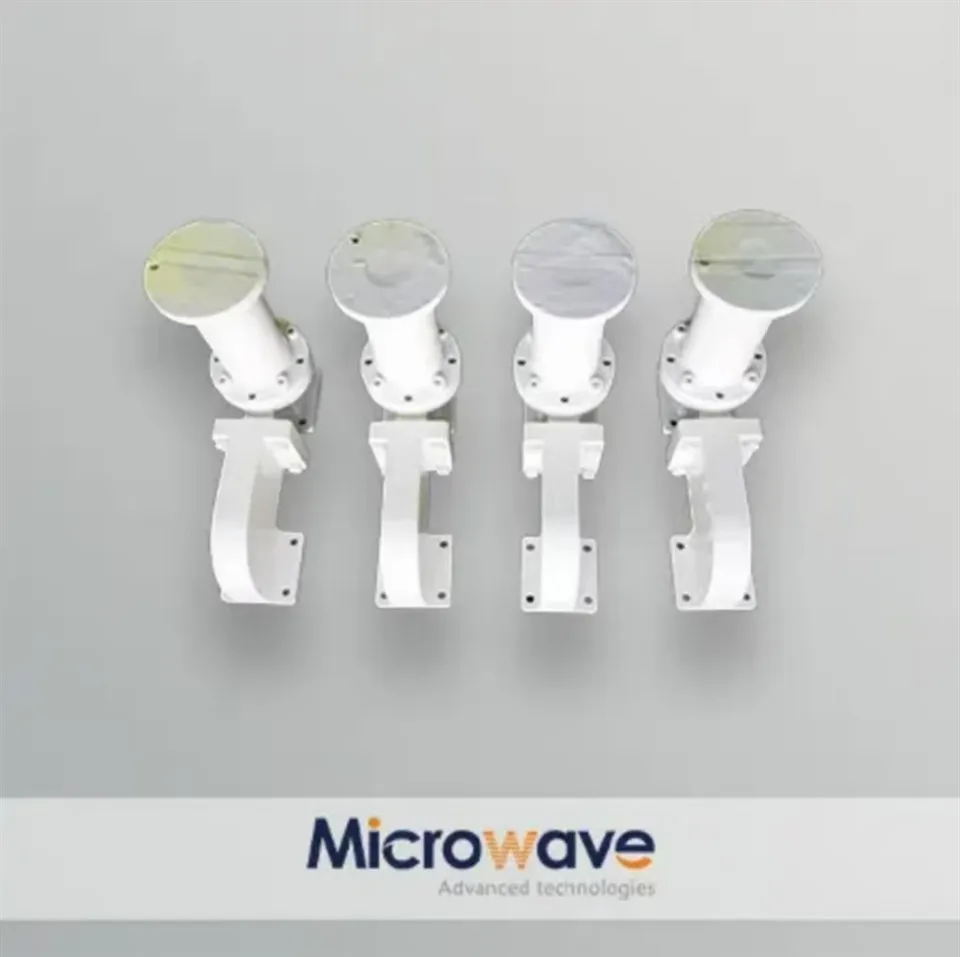

By using advanced simulation tools and optimization algorithms, the internal structure of the quadrature mode coupler can be redesigned to achieve better performance. Additionally, the use of high-quality materials and precision manufacturing techniques can further enhance its reliability and stability.
Ka Band OMT
The Ka Band OMT is widely used in satellite communication systems operating in the Ka frequency band. Upgrades for Ka Band OMTs may focus on improving the performance in terms of insertion loss, return loss, and isolation at the high frequencies of the Ka band.
Advanced dielectric materials with low loss tangent at Ka band frequencies can be used to reduce the insertion loss. Additionally, the design of the OMT can be optimized to minimize the reflections at the input and output ports, thereby improving the return loss.
DBS Band OMT (Ortho - Mode Transducer)
The DBS Band OMT (Ortho - Mode Transducer) is used in Direct - Broadcast Satellite (DBS) systems. Upgrades for DBS Band OMTs may involve improving the polarization purity, increasing the power handling capacity, and reducing the size of the OMT.
New design concepts and manufacturing techniques can be employed to achieve these upgrades. For example, the use of compact waveguide structures and advanced materials can help in reducing the size of the OMT without compromising its performance.
Conclusion
In conclusion, there are numerous upgrade options available for OMTs to meet the ever - changing requirements of modern communication systems. Whether it is enhancing the performance, expanding the functionality, or improving the compatibility, these upgrades can significantly improve the overall performance and reliability of the OMTs.
If you are interested in upgrading your OMTs or exploring the various options available, I encourage you to contact us for a detailed discussion. Our team of experts can provide you with customized solutions based on your specific requirements. We are committed to providing high - quality OMTs and upgrade services to help you stay ahead in the competitive market.
References
- Pozar, D. M. (2011). Microwave Engineering (4th ed.). Wiley.
- Collin, R. E. (2001). Foundations for Microwave Engineering (2nd ed.). McGraw - Hill.
- Bahl, I. J., & Bhartia, P. (1988). Microwave Solid - State Circuit Design. Wiley.