

Hey there! As a supplier of Ka Band OMTs, I often get asked about the noise figure requirements for these devices. So, I thought I'd take a moment to break it down for you.
First off, let's talk about what a Ka Band OMT is. An Ortho-Mode Transducer (OMT) is a key component in satellite communication systems. It separates or combines two orthogonal polarization signals, typically horizontal and vertical polarizations, in the Ka frequency band (26.5 - 40 GHz). This allows for more efficient use of the available frequency spectrum by enabling simultaneous transmission and reception of two independent signals.
Now, the noise figure is a crucial parameter when it comes to OMTs. It measures how much the device degrades the signal-to-noise ratio (SNR) of the incoming signal. In simple terms, a lower noise figure means that the OMT adds less noise to the signal, which is essential for maintaining high-quality communication.
So, what are the typical noise figure requirements for Ka Band OMTs? Well, it depends on the specific application. In general, for most satellite communication systems, a noise figure of less than 0.5 dB is desirable. This ensures that the signal quality remains high, even over long distances and in challenging environmental conditions.
However, in some high-performance applications, such as deep space communication or military satellite systems, the noise figure requirements can be even more stringent. In these cases, a noise figure of less than 0.3 dB may be required to achieve the necessary level of signal fidelity.
There are several factors that can affect the noise figure of a Ka Band OMT. One of the most important is the design and construction of the device itself. High-quality materials and precise manufacturing techniques are essential for minimizing losses and reducing noise. Additionally, the internal structure of the OMT, including the shape and dimensions of the waveguide sections, can have a significant impact on its performance.
Another factor to consider is the operating environment. Temperature, humidity, and other environmental conditions can all affect the noise figure of an OMT. For example, high temperatures can cause the materials in the device to expand, which can lead to increased losses and a higher noise figure. To mitigate these effects, many Ka Band OMTs are designed to operate over a wide temperature range and are equipped with temperature compensation mechanisms.
In addition to the noise figure, there are other important parameters to consider when evaluating a Ka Band OMT. These include insertion loss, return loss, isolation, and polarization purity. Insertion loss measures the amount of signal power that is lost as the signal passes through the OMT. A low insertion loss is desirable to minimize signal degradation. Return loss, on the other hand, measures the amount of signal power that is reflected back from the OMT. A high return loss indicates that the OMT is well-matched to the input and output ports, which helps to reduce reflections and improve signal quality.
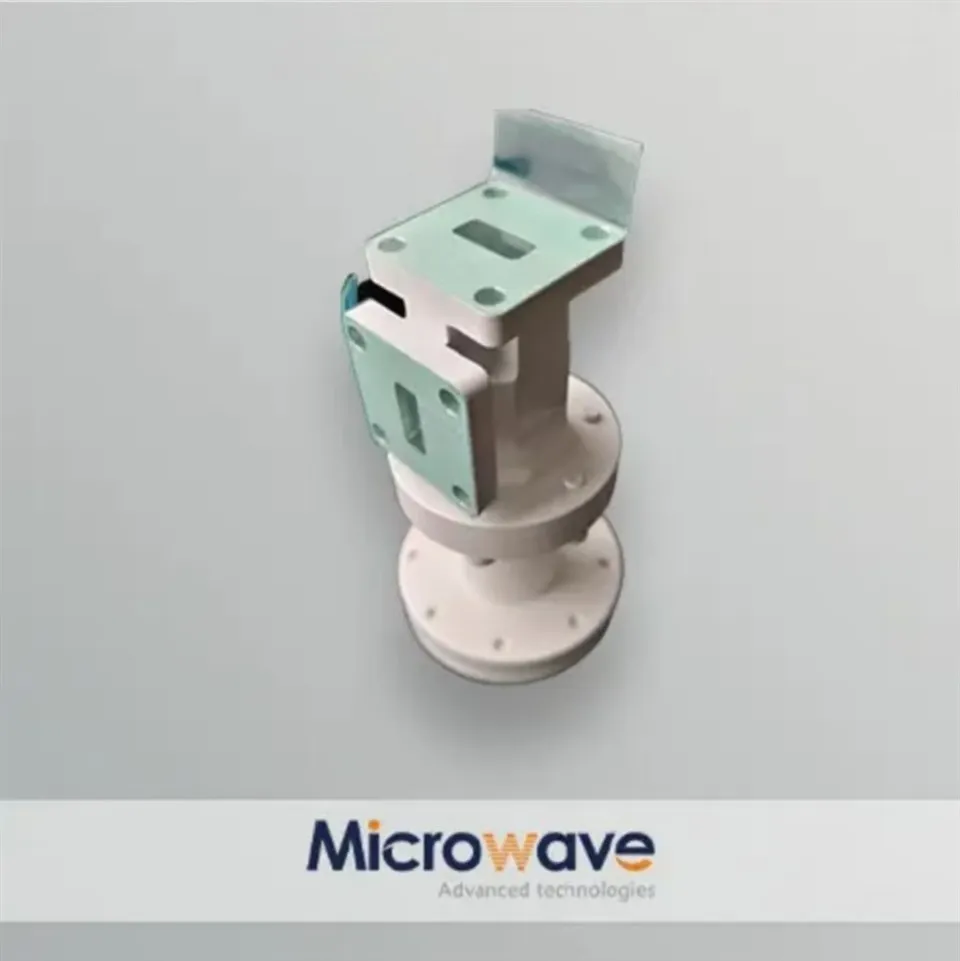

Isolation refers to the degree of separation between the two orthogonal polarization signals. A high isolation is essential to prevent interference between the two signals and ensure that they can be transmitted and received independently. Finally, polarization purity measures the degree to which the OMT maintains the polarization of the incoming signal. A high polarization purity is important for maintaining the integrity of the signal and ensuring that it can be accurately decoded at the receiving end.
At our company, we specialize in the design and manufacture of high-performance Ka Band OMTs. Our products are designed to meet the most demanding noise figure requirements, while also offering excellent insertion loss, return loss, isolation, and polarization purity. We use the latest technologies and materials to ensure that our OMTs are reliable, durable, and easy to integrate into a variety of satellite communication systems.
If you're in the market for a Ka Band OMT, I encourage you to check out our product offerings. We offer a wide range of OMTs to suit different applications and requirements. You can learn more about our products by visiting our website at OMTs-Quadrature Mode Coupler, Ku Band OMT, and DBS Band OMT (Ortho-Mode Transducer).
If you have any questions or would like to discuss your specific requirements, please don't hesitate to contact us. Our team of experts is always happy to help you find the right solution for your needs. Whether you're a satellite operator, a system integrator, or a research institution, we're confident that we can provide you with the high-quality Ka Band OMTs you need to achieve your goals.
So, if you're looking for a reliable and high-performance Ka Band OMT, look no further. Contact us today to learn more about our products and how we can help you with your satellite communication needs.
References:
- Satellite Communication Systems: Principles and Design by Jean-Pierre Varin
- Microwave Engineering by David M. Pozar
- Handbook of Satellite Communications by Gerald L. Maral and Michel Bousquet