

Hey there! As a supplier of Waveguide Rotary Joints, I've seen firsthand the amazing benefits these nifty devices bring to the table. In this blog, I'm gonna break down the advantages of using a Waveguide Rotary Joint, so you can see why they're such a big deal in the world of RF and microwave systems.
1. Flexibility in Movement
One of the most obvious advantages of a Waveguide Rotary Joint is the flexibility it offers in terms of movement. In many RF and microwave applications, you need to be able to rotate or move parts of the system without disrupting the signal transmission. That's where these joints come in. They allow for smooth and continuous rotation, which is super useful in things like radar systems, satellite communication, and even some industrial applications.
For example, in a radar system, the antenna needs to be able to rotate to scan different areas. A Waveguide Rotary Joint enables this rotation while maintaining a stable connection for the RF signals. This means that the radar can cover a wider area and provide more accurate data. Without a rotary joint, you'd have to deal with a fixed antenna, which would severely limit the system's capabilities.
2. High - Frequency Performance
Waveguide Rotary Joints are designed to work at high frequencies. They can handle RF signals in the microwave range, which is crucial for modern communication and radar systems. These joints are engineered to minimize signal loss and maintain signal integrity even at high frequencies.
The construction of waveguide rotary joints is optimized to reduce reflections and attenuation. The waveguides are carefully designed with precise dimensions and smooth inner surfaces to ensure that the RF waves can travel through them efficiently. This high - frequency performance is essential for applications such as 5G communication, where high - speed data transfer at microwave frequencies is required.
3. Durability and Reliability
When you're investing in a component for your RF or microwave system, you want it to last. Waveguide Rotary Joints are built to be durable and reliable. They are made from high - quality materials that can withstand harsh environmental conditions, including temperature variations, humidity, and vibration.
In industrial settings, for example, these joints need to operate in tough environments. They are often used in machinery that generates a lot of heat and vibration. A well - made waveguide rotary joint can handle these conditions without breaking down or losing performance. This reliability means less downtime for your system, which can save you a lot of money in the long run.
4. Customizability
Every RF and microwave application is different, and that's why customizability is a big advantage of Waveguide Rotary Joints. As a supplier, we can customize these joints to meet the specific needs of our customers. Whether it's the size, the frequency range, or the type of waveguide, we can tailor the joint to fit your system perfectly.
If you're working on a unique radar project that requires a specific frequency range and a particular size of waveguide, we can design and manufacture a rotary joint just for you. This customizability ensures that you get the best performance from your system, as the joint is optimized for your exact requirements.
5. Compatibility with Different Waveguide Types
Waveguide Rotary Joints are available in different types to be compatible with various waveguide systems. There are rectangular, circular, and even L - shaped waveguide rotary joints. This compatibility allows you to integrate the joint into your existing waveguide system without any major modifications.
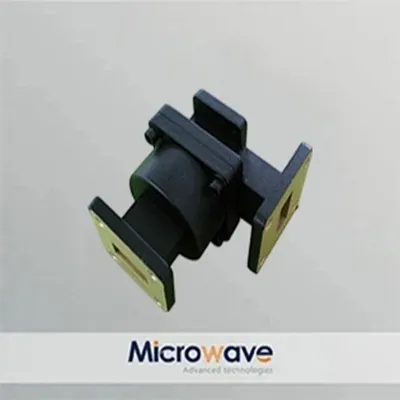

For instance, if you have a system that uses rectangular waveguides, you can easily find a rectangular waveguide rotary joint that will fit right in. And if you're looking for something more specialized, like a New Circular Waveguide Rotary Joint, we've got you covered. These joints also support single - channel operations, and you can check out our Single - channel Waveguide Rotary Joints for more details. And if you need a joint with a unique shape, our L - Shaped Rotary Joint might be the perfect solution.
6. Cost - Effectiveness
In the long run, using a Waveguide Rotary Joint can be a cost - effective solution. While the initial investment might seem a bit high, the benefits they bring in terms of performance, reliability, and customizability make them worth the money.
Since they are durable and reliable, you won't have to replace them as often as other components. And because they can be customized to fit your system, you can avoid the cost of making major modifications to your waveguide system. This means that over time, you'll save money on maintenance, replacement parts, and system upgrades.
7. Improved Signal Quality
Waveguide Rotary Joints play a crucial role in improving signal quality. By minimizing signal loss and reflections, they ensure that the RF signals transmitted through the waveguide are as clean and strong as possible.
In communication systems, this means better data transfer rates and fewer errors. In radar systems, it results in more accurate target detection and tracking. The improved signal quality can have a significant impact on the overall performance of your RF or microwave system.
Contact Us for Your Waveguide Rotary Joint Needs
So, there you have it - the many advantages of using a Waveguide Rotary Joint. If you're in the market for these joints, whether it's for a new project or to upgrade an existing system, we'd love to hear from you. We're a trusted supplier with years of experience in the industry, and we can provide you with high - quality, customized Waveguide Rotary Joints.
Don't hesitate to reach out to us to discuss your requirements and get a quote. We're here to help you find the perfect solution for your RF and microwave needs.
References
- Pozar, D. M. (2011). Microwave Engineering. Wiley.
- Collin, R. E. (2001). Foundations for Microwave Engineering. Wiley.