

As a seasoned supplier of Waveguide Rotary Joints, I've witnessed firsthand the intricate relationship between directivity and the overall performance of these crucial components. In this blog, we'll delve into the science behind directivity and explore how it impacts the functionality of Waveguide Rotary Joints.
Understanding Directivity in Waveguide Rotary Joints
Directivity is a fundamental parameter that describes the ability of a Waveguide Rotary Joint to transmit electromagnetic waves in a specific direction while minimizing reflections and leakage in other directions. In simple terms, it measures how well the joint can guide the signal from the input port to the output port with minimal interference.
The directivity of a Waveguide Rotary Joint is typically expressed in decibels (dB) and is defined as the ratio of the power transmitted in the desired direction to the power reflected or leaked in the opposite direction. A high directivity value indicates that the joint is highly efficient at guiding the signal in the intended direction, while a low directivity value suggests that there is significant reflection or leakage, which can degrade the performance of the system.
Factors Affecting Directivity
Several factors can influence the directivity of a Waveguide Rotary Joint, including the design of the joint, the materials used, and the operating frequency. Let's take a closer look at each of these factors:
Design
The design of a Waveguide Rotary Joint plays a crucial role in determining its directivity. A well-designed joint will have a smooth and continuous path for the electromagnetic waves to travel, minimizing reflections and leakage. The shape and dimensions of the waveguide, as well as the location and orientation of the input and output ports, can all affect the directivity of the joint.

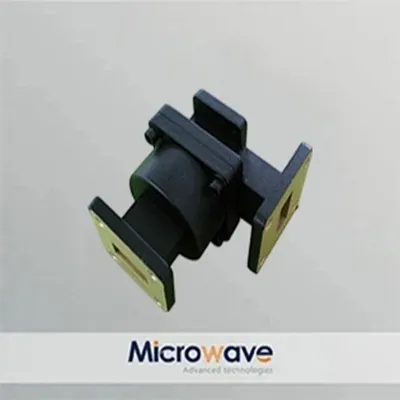
For example, a L-Shaped Rotary Joint is designed to provide a 90-degree bend in the waveguide, which can be useful in applications where space is limited. However, the bend in the waveguide can introduce reflections and reduce the directivity of the joint. To minimize these effects, the L-Shaped Rotary Joint is typically designed with a smooth and gradual bend, and the input and output ports are carefully positioned to ensure that the signal is transmitted efficiently.
Materials
The materials used in the construction of a Waveguide Rotary Joint can also have a significant impact on its directivity. The waveguide itself is typically made of a conductive material, such as copper or aluminum, which provides a low-loss path for the electromagnetic waves to travel. The joints between the waveguide sections are usually sealed with a conductive gasket or o-ring to prevent leakage.
In addition to the waveguide, the other components of the Waveguide Rotary Joint, such as the bearings and the rotating mechanism, can also affect the directivity. These components are typically made of non-conductive materials, such as plastic or ceramic, which can introduce some loss and reflection. To minimize these effects, the materials used in the construction of the Waveguide Rotary Joint are carefully selected and designed to provide a low-loss and high-directivity path for the electromagnetic waves.
Operating Frequency
The operating frequency of a Waveguide Rotary Joint is another important factor that can affect its directivity. The directivity of a joint is typically highest at the frequency for which it is designed, and it decreases as the frequency deviates from the design frequency. This is because the wavelength of the electromagnetic waves changes with frequency, and the design of the joint is optimized for a specific wavelength.
For example, a Waveguide Rotary Joint designed for use at a frequency of 10 GHz will have a higher directivity at 10 GHz than at 5 GHz or 15 GHz. To ensure that the Waveguide Rotary Joint operates efficiently over a wide range of frequencies, it is typically designed with a broadband response, which means that it can maintain a high directivity over a relatively wide frequency band.
Impact of Directivity on Performance
The directivity of a Waveguide Rotary Joint can have a significant impact on the performance of the system in which it is used. A high directivity joint will provide a more efficient and reliable transmission of the electromagnetic waves, while a low directivity joint can introduce reflections and interference, which can degrade the performance of the system.
Let's take a look at some of the specific ways in which directivity can affect the performance of a Waveguide Rotary Joint:
Signal Loss
One of the most significant impacts of directivity on performance is signal loss. A low directivity joint will have a higher level of reflection and leakage, which means that some of the power from the input signal will be lost in the joint. This can result in a weaker output signal, which can reduce the range and sensitivity of the system.
For example, in a radar system, a low directivity Waveguide Rotary Joint can cause the radar signal to be reflected back towards the transmitter, which can reduce the strength of the signal received by the radar antenna. This can result in a reduced range and accuracy of the radar system.
Interference
Another impact of directivity on performance is interference. A low directivity joint can introduce reflections and leakage, which can cause interference with other signals in the system. This can result in a degraded signal-to-noise ratio, which can reduce the performance of the system.
For example, in a communication system, a low directivity Waveguide Rotary Joint can cause the transmitted signal to be reflected back towards the receiver, which can interfere with the received signal. This can result in a degraded quality of the communication, such as dropped calls or poor audio quality.
System Reliability
The directivity of a Waveguide Rotary Joint can also affect the reliability of the system in which it is used. A high directivity joint will provide a more stable and consistent transmission of the electromagnetic waves, which can reduce the likelihood of system failures.
For example, in a satellite communication system, a low directivity Waveguide Rotary Joint can cause the satellite to lose its connection with the ground station, which can result in a loss of communication. This can have serious consequences for the operation of the satellite and the services it provides.
Choosing the Right Waveguide Rotary Joint
When choosing a Waveguide Rotary Joint, it is important to consider the directivity requirements of the system. A high directivity joint will provide a more efficient and reliable transmission of the electromagnetic waves, but it may also be more expensive and have a more limited frequency range.
Here are some tips to help you choose the right Waveguide Rotary Joint for your application:
Determine the Directivity Requirements
The first step in choosing a Waveguide Rotary Joint is to determine the directivity requirements of the system. This will depend on the specific application and the performance requirements of the system. For example, a radar system may require a high directivity joint to ensure accurate and reliable operation, while a communication system may require a lower directivity joint to reduce cost and complexity.
Consider the Operating Frequency
The operating frequency of the system is another important factor to consider when choosing a Waveguide Rotary Joint. The directivity of a joint is typically highest at the frequency for which it is designed, and it decreases as the frequency deviates from the design frequency. Therefore, it is important to choose a joint that is designed to operate at the frequency of the system.
Evaluate the Design and Materials
The design and materials of the Waveguide Rotary Joint can also have a significant impact on its directivity and performance. A well-designed joint with high-quality materials will provide a more efficient and reliable transmission of the electromagnetic waves. Therefore, it is important to evaluate the design and materials of the joint before making a purchase.
Consider the Cost and Availability
Finally, it is important to consider the cost and availability of the Waveguide Rotary Joint. A high directivity joint may be more expensive and have a more limited availability than a lower directivity joint. Therefore, it is important to balance the performance requirements of the system with the cost and availability of the joint.
Conclusion
In conclusion, directivity is a crucial parameter that affects the performance of a Waveguide Rotary Joint. A high directivity joint will provide a more efficient and reliable transmission of the electromagnetic waves, while a low directivity joint can introduce reflections and interference, which can degrade the performance of the system.
As a supplier of Waveguide Rotary Joints and Single-channel Waveguide Rotary Joints, we understand the importance of directivity and its impact on the performance of our products. We offer a wide range of high-quality Waveguide Rotary Joints that are designed to meet the specific requirements of our customers.
If you are interested in learning more about our Waveguide Rotary Joints or would like to discuss your specific application, please contact us. Our team of experts will be happy to assist you in choosing the right joint for your needs and provide you with the information and support you need to make an informed decision.
References
- Pozar, D. M. (2011). Microwave Engineering (4th ed.). Wiley.
- Collin, R. E. (2001). Foundations for Microwave Engineering (2nd ed.). McGraw-Hill.
- Balanis, C. A. (2012). Antenna Theory: Analysis and Design (3rd ed.). Wiley.