

Hey there! I'm a supplier of E Plane Bend Waveguides, and I've been getting a lot of questions lately about whether these nifty devices can be used in space applications. So, I thought I'd sit down and write a blog post to dig into this topic.
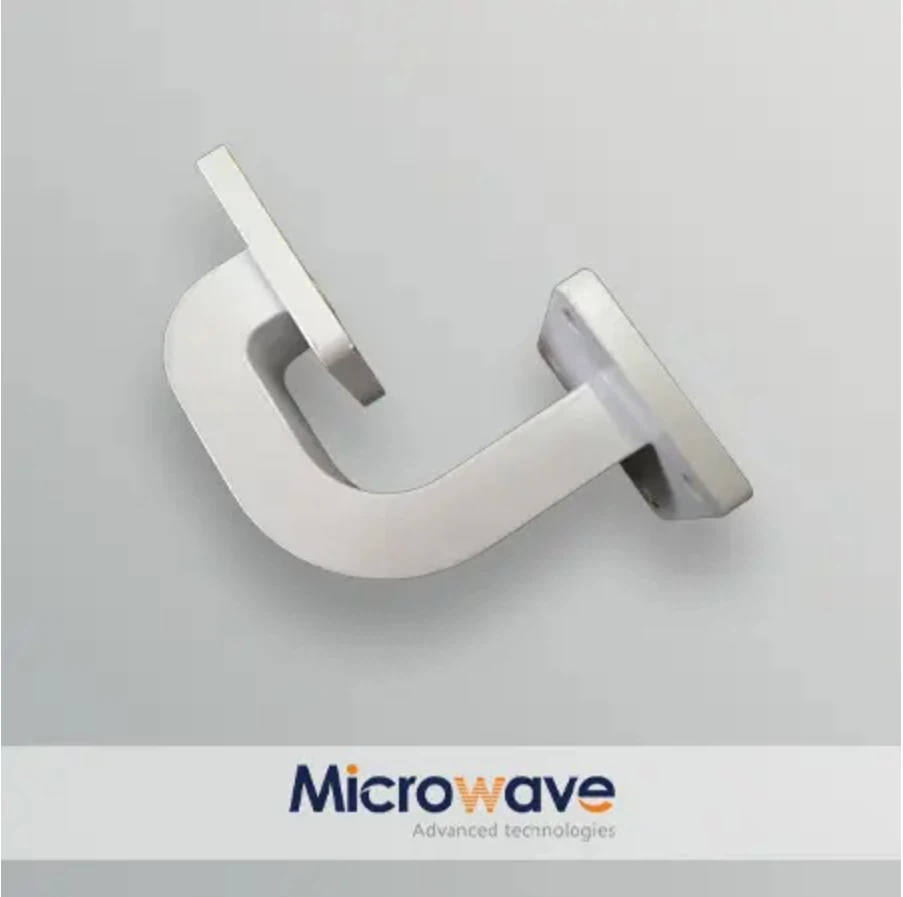
First off, let's quickly go over what an E Plane Bend Waveguide is. Simply put, it's a component that guides electromagnetic waves. It's designed to change the direction of the wave in the E - plane, which is the plane of the electric field. These waveguides are super important in all sorts of RF (radio - frequency) and microwave systems. They're used in things like radar systems, satellite communication, and wireless networks here on Earth.
Now, when we talk about space applications, we're entering a whole new ballgame. Space is a harsh environment. There are extreme temperatures, radiation, and a vacuum. These factors can really take a toll on any piece of equipment. So, can an E Plane Bend Waveguide hold up in this kind of environment?
Temperature Challenges
One of the big issues in space is temperature. Temperatures in space can range from extremely cold, like - 270°C in the shadow of a planet or satellite, to very hot, up to 120°C when directly exposed to the sun. These wild temperature swings can cause materials to expand and contract.
Most E Plane Bend Waveguides are made from metals like aluminum or brass. These metals have different coefficients of thermal expansion. When the temperature changes rapidly, this can lead to stress on the waveguide. If the stress is too much, it can cause the waveguide to deform, which in turn can affect the way it guides the electromagnetic waves.
However, some advanced E Plane Bend Waveguides are designed with materials that have a very low coefficient of thermal expansion. For example, certain composite materials can be used. These materials can handle the temperature changes much better, reducing the risk of deformation.

Radiation Exposure
Radiation is another major concern in space. There are different types of radiation, including solar flares, cosmic rays, and Van Allen radiation belts. Radiation can damage the electronic components of the waveguide.
When radiation hits the waveguide, it can create free electrons and holes in the material. These free carriers can interfere with the flow of the electromagnetic waves. Over time, this can lead to a degradation of the waveguide's performance.
To combat this, shielding can be used. Special coatings can be applied to the E Plane Bend Waveguide to protect it from radiation. These coatings are made of materials that can absorb or deflect the radiation before it reaches the waveguide itself.
Vacuum Conditions
In space, there's a vacuum. On Earth, we're used to having air around us, and air can actually help dissipate heat. In a vacuum, heat transfer is mainly through radiation. This means that any heat generated inside the E Plane Bend Waveguide has a harder time getting out.
If the heat builds up, it can cause the temperature of the waveguide to rise, which as we've already discussed, can lead to deformation. To deal with this, heat sinks can be added to the waveguide. These heat sinks are designed to radiate the heat away more efficiently.
Advantages of Using E Plane Bend Waveguides in Space
Despite these challenges, there are some good reasons to use E Plane Bend Waveguides in space applications.
One of the main advantages is their ability to control the direction of electromagnetic waves. In space communication, precise control of the signal is crucial. E Plane Bend Waveguides can be used to direct the signal towards a specific target, like another satellite or a ground station.
They're also relatively compact. In space, where every inch of space matters, having a small and lightweight component is a big plus. E Plane Bend Waveguides can be designed to fit into tight spaces on a satellite or a spacecraft.
Other Waveguide Options
If you're considering waveguide options for space applications, there are a couple of other types you might want to look into. You can check out Twist Flexible Rectangle Waveguides and Flexible Elliptical Waveguides. These waveguides have their own unique features and might be more suitable depending on your specific needs.
Conclusion
So, can an E Plane Bend Waveguide be used in space applications? The answer is yes, but with some caveats. With the right design, materials, and protective measures, these waveguides can withstand the harsh conditions of space.
If you're in the market for E Plane Bend Waveguides for your space project, or if you just want to learn more, I'd love to chat. Whether you're looking for a waveguide that can handle extreme temperatures, radiation, or vacuum conditions, we've got options. You can check out our E Plane Bend Waveguide page to see what we have to offer. And if you have any questions or want to start a procurement discussion, don't hesitate to reach out.
References
- "Spacecraft Thermal Control Handbook" by David G. Gilmore
- "Fundamentals of Waveguides and Transmission Lines" by John D. Kraus
- "Radiation Effects in Electronic Materials and Devices" by C. L. Ma