

In the dynamic realm of satellite communication, the Ka&Ku Multiband Feed System stands as a pivotal component, enabling high - speed data transmission and seamless connectivity across diverse applications. As a dedicated supplier of Ka&Ku Multiband Feed Systems, I've witnessed firsthand the challenges and opportunities in optimizing the efficiency of these systems. In this blog, I'll share some insights and strategies that can be employed to enhance the performance of Ka&Ku Multiband Feed Systems.
Understanding the Ka&Ku Multiband Feed System
Before delving into efficiency improvement, it's essential to have a clear understanding of what a Ka&Ku Multiband Feed System is. The Ka and Ku bands are microwave frequencies used in satellite communication. The Ka band operates at frequencies between 26.5 and 40 GHz, while the Ku band ranges from 12 to 18 GHz. A Ka&Ku Multiband Feed System is designed to handle signals in both these frequency bands simultaneously, providing flexibility and enhanced capacity for satellite communication systems.
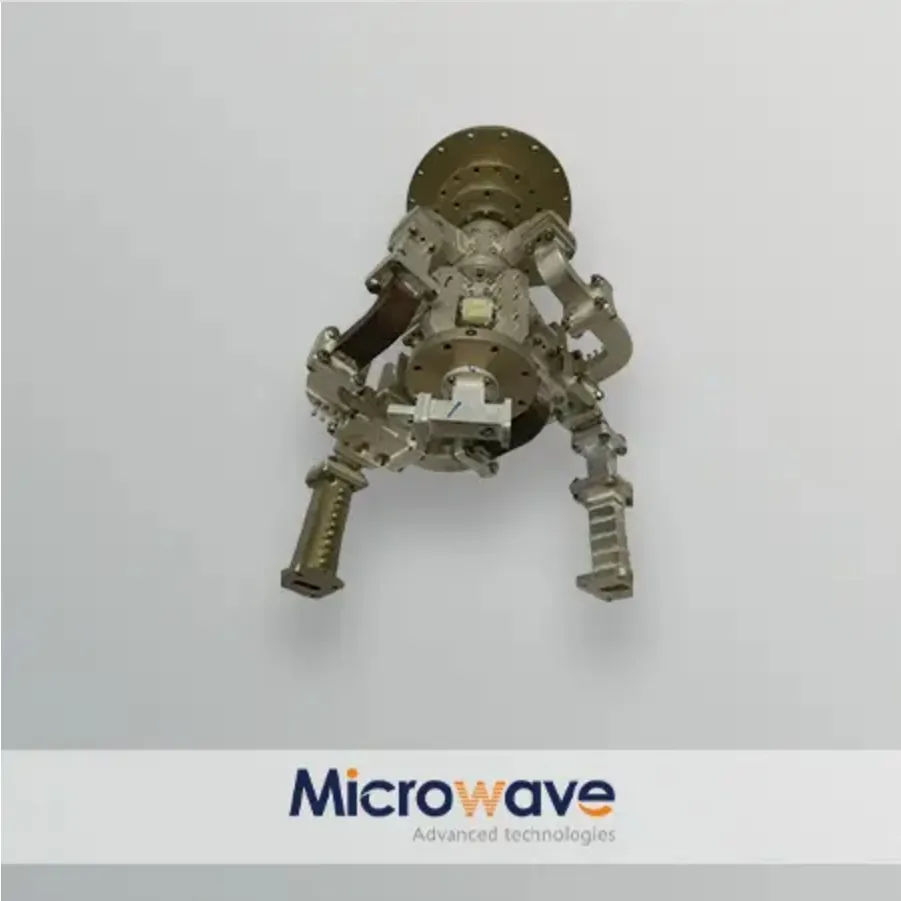
The system typically consists of multiple components, including feed horns, diplexers, and low - noise amplifiers (LNAs). Feed horns are responsible for capturing the incoming signals from the satellite, while diplexers separate the Ka and Ku band signals. LNAs amplify the weak signals received from the feed horns, improving the signal - to - noise ratio.

Factors Affecting the Efficiency of Ka&Ku Multiband Feed Systems
Several factors can impact the efficiency of Ka&Ku Multiband Feed Systems. One of the primary factors is the design of the feed horns. The shape, size, and material of the feed horns can significantly affect their radiation pattern and gain. A well - designed feed horn will have a narrow beamwidth, high gain, and low sidelobe levels, which are essential for efficient signal capture.
Another crucial factor is the performance of the diplexers. Diplexers need to have low insertion loss and high isolation between the Ka and Ku bands. Insertion loss refers to the amount of signal power lost as it passes through the diplexer, while isolation measures the degree of separation between the two frequency bands. High insertion loss can reduce the overall signal strength, while poor isolation can lead to interference between the Ka and Ku band signals.
The quality of the LNAs also plays a vital role in the system's efficiency. LNAs should have low noise figures, high gain, and good linearity. A low noise figure ensures that the amplified signal has a high signal - to - noise ratio, while high gain boosts the signal strength. Good linearity is necessary to prevent distortion of the signal.
Environmental factors can also affect the efficiency of Ka&Ku Multiband Feed Systems. For example, rain fade can cause significant signal attenuation in the Ka and Ku bands, especially during heavy rainfall. Temperature fluctuations can also impact the performance of the system's components, leading to changes in their electrical properties.
Strategies to Improve the Efficiency of Ka&Ku Multiband Feed Systems
Optimized Feed Horn Design
To improve the efficiency of the feed horns, advanced design techniques can be employed. Computer - aided design (CAD) tools can be used to simulate different feed horn geometries and materials, allowing for the selection of the most suitable design. For example, using a corrugated feed horn can improve the radiation pattern and reduce sidelobe levels. The corrugations on the inner surface of the feed horn help to suppress unwanted radiation modes, resulting in a more focused beam.
High - Performance Diplexers
Investing in high - quality diplexers is crucial for improving the system's efficiency. Diplexers with low insertion loss and high isolation can be selected. New materials and manufacturing processes can also be explored to enhance the performance of diplexers. For instance, using microstrip or stripline technology can reduce the size and weight of the diplexers while maintaining their electrical performance.
Advanced LNAs
Upgrading to advanced LNAs can significantly improve the signal - to - noise ratio of the system. LNAs with low noise figures and high gain can be chosen. Additionally, using low - noise amplifier modules with built - in temperature compensation circuits can help to maintain stable performance under different temperature conditions.
Environmental Protection
To mitigate the effects of environmental factors, proper environmental protection measures can be implemented. For example, installing weatherproof enclosures around the feed system can protect it from rain, dust, and other environmental elements. Thermal insulation can also be used to minimize the impact of temperature fluctuations on the system's components.
System Integration and Calibration
Proper system integration and calibration are essential for ensuring the overall efficiency of the Ka&Ku Multiband Feed System. During the integration process, all components should be carefully aligned and connected to minimize signal loss. Calibration should be performed regularly to adjust the system's parameters and ensure optimal performance. This includes adjusting the gain of the LNAs, the frequency response of the diplexers, and the radiation pattern of the feed horns.
The Role of Research and Development
Continuous research and development (R&D) are vital for improving the efficiency of Ka&Ku Multiband Feed Systems. R&D efforts can focus on exploring new materials, design concepts, and manufacturing processes. For example, the use of metamaterials in feed horn design has the potential to significantly improve their performance. Metamaterials are artificial materials with unique electromagnetic properties that can be engineered to achieve specific radiation characteristics.
R&D can also lead to the development of more advanced signal processing algorithms. These algorithms can be used to compensate for signal attenuation, interference, and other impairments in real - time, enhancing the overall efficiency of the system.
Applications of Efficient Ka&Ku Multiband Feed Systems
Efficient Ka&Ku Multiband Feed Systems have a wide range of applications in satellite communication. They are commonly used in satellite broadband services, providing high - speed internet access to remote areas. In the field of broadcasting, these systems enable the transmission of high - definition television signals. They are also used in military and government applications, where secure and reliable communication is of utmost importance.
For more information about related feed systems, you can visit our C/KU Multiband Feed System and Receive Only Feed Network pages. If you are interested in our Ka&Ku Multiband Feed System, we welcome you to contact us for procurement and negotiation. We are committed to providing you with high - quality products and excellent service.
Conclusion
Improving the efficiency of Ka&Ku Multiband Feed Systems is a complex but achievable goal. By understanding the factors that affect the system's performance and implementing appropriate strategies, such as optimized feed horn design, high - performance diplexers, advanced LNAs, environmental protection, and proper system integration and calibration, significant improvements can be made. Continuous research and development also play a crucial role in driving innovation and enhancing the efficiency of these systems. If you are in need of a reliable Ka&Ku Multiband Feed System, don't hesitate to reach out to us for further discussion and procurement.
References
- Pozar, D. M. (2011). Microwave Engineering. Wiley.
- Balanis, C. A. (2016). Antenna Theory: Analysis and Design. Wiley.
- Skolnik, M. I. (2008). Introduction to Radar Systems. McGraw - Hill.